Modern B2B growth strategies are undergoing a structural transformation. In many enterprise organisations, traditional demand generation models built around isolated campaigns, disconnected systems, and volume-driven lead metrics are no longer delivering the same competitive advantage they once did.
Today’s buying journeys are increasingly digital, self-directed, multi-stakeholder, and heavily influenced by fragmented engagement across multiple channels long before a direct sales interaction occurs. As a result, organisations are beginning to recognise that generating demand alone is no longer enough. The real differentiator is the ability to orchestrate revenue execution across data, engagement, sales alignment, and buying intelligence in a connected and measurable way.
This shift is accelerating the rise of what many revenue leaders now describe as revenue orchestration.
The Modern Buyer Journey Has Become Operationally Complex
Enterprise buying decisions rarely follow a linear progression. Buyers now move fluidly between analyst reports, webinars, industry publications, LinkedIn discussions, peer communities, AI-powered research tools, review platforms, partner ecosystems, and third-party content environments throughout the decision-making process.
At the same time, purchasing decisions increasingly involve multiple stakeholders across procurement, finance, IT, cybersecurity, operations, legal, and executive leadership teams. Each stakeholder consumes information differently, engages at different stages, and evaluates value through different operational priorities.
This creates a major challenge for traditional go-to-market models.
Many organisations still operate with fragmented systems where marketing engagement data, intent signals, CRM activity, sales outreach, and customer intelligence remain disconnected. In these environments, valuable buyer signals are often captured but never operationalised effectively across the wider revenue organisation.
Revenue orchestration is emerging as the strategic response to this complexity.

Revenue Orchestration Connects Intelligence with Execution
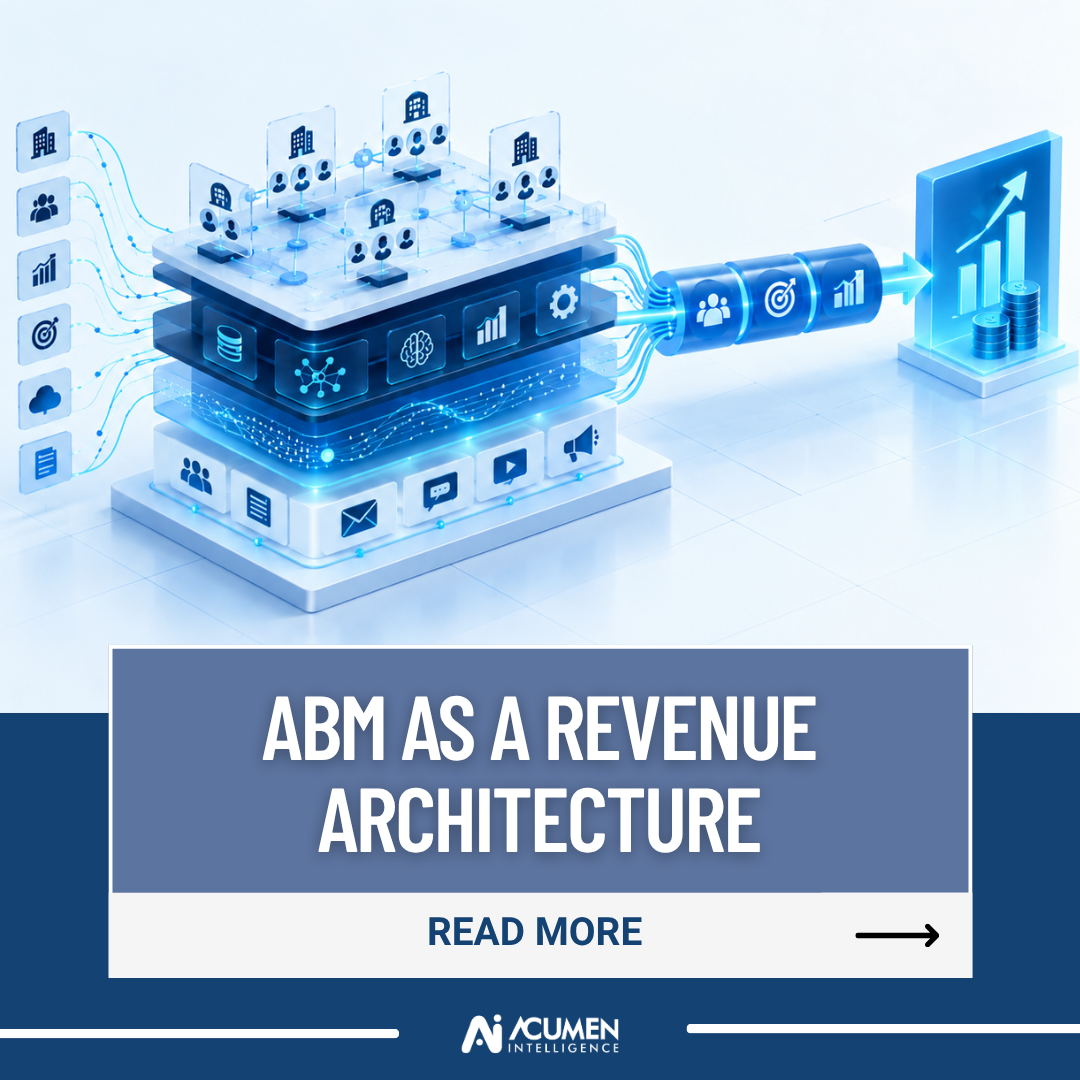
At its core, revenue orchestration is the process of aligning data intelligence, buyer engagement, pipeline activity, and cross-functional execution into a unified revenue ecosystem.
Rather than treating demand generation, sales engagement, ABM, customer intelligence, and revenue operations as separate functions, revenue orchestration creates operational connectivity between them.
This enables organisations to:
- Identify high-intent buying behaviour earlier
- Align engagement across buying groups rather than individual leads
- Deliver more contextually relevant outreach
- Improve pipeline visibility across the revenue lifecycle
- Accelerate deal velocity through coordinated execution
- Reduce operational inefficiencies caused by disconnected systems
The strategic value lies not simply in collecting more data, but in transforming fragmented intelligence into actionable revenue momentum.
As digital buying journeys continue to decentralise, organisations that can operationalise buyer intelligence in real time will increasingly outperform those still relying on siloed engagement models.
Buying-Group Intelligence Is Reshaping Revenue Strategy
One of the most significant developments driving revenue orchestration is the growing importance of buying-group visibility.
In modern enterprise sales environments, purchasing decisions are rarely influenced by a single decision-maker. Multiple stakeholders often interact with content, attend webinars, engage with digital campaigns, consume analyst research, and participate in evaluation processes simultaneously across different channels.
Traditional lead-centric measurement models struggle to capture this complexity.
Revenue orchestration enables organisations to connect engagement signals across multiple stakeholders within the same target account, creating a more complete view of buying readiness and pipeline opportunity.
This shift is fundamentally changing how organisations approach account prioritisation, sales alignment, and demand generation performance measurement.
The focus is moving away from isolated lead activity and towards collective account-level engagement intelligence.
AI Is Accelerating the Revenue Orchestration Era
Artificial intelligence is further amplifying the importance of connected revenue ecosystems.
AI-driven analytics, predictive modelling, behavioural intelligence, and automated engagement systems all depend on structured, connected, and high-quality data foundations to generate meaningful business outcomes.
Without operational alignment across marketing systems, sales platforms, intent data, CRM infrastructure, and customer engagement channels, even the most advanced AI capabilities become limited in strategic value.
This is why many organisations are now investing heavily in AI-ready revenue infrastructure designed to unify engagement data, pipeline intelligence, and buyer behaviour into a single operational framework.
The organisations gaining competitive advantage are not necessarily those adopting the most AI tools. Rather, they are the ones building the most connected intelligence environments around revenue execution.
Revenue Performance Is Becoming an Intelligence Challenge
As market competition intensifies and enterprise buying cycles become increasingly sophisticated, revenue growth is no longer driven solely by campaign activity or sales volume.
It is increasingly determined by how effectively organisations can connect intelligence, engagement, and execution across the entire buyer journey.
Revenue orchestration represents this broader strategic evolution.
It reflects a growing recognition that modern growth depends on operational alignment between marketing, sales, data, technology, and customer intelligence functions working together within a unified revenue system.
In the years ahead, organisations that successfully operationalise revenue orchestration will be better positioned to identify buying opportunities earlier, engage stakeholders more intelligently, improve pipeline efficiency, and drive more predictable revenue outcomes.
In an increasingly intelligence-driven B2B landscape, revenue orchestration is rapidly becoming more than an operational advantage. It is becoming a competitive necessity.